Upland Game Identification
Similar species:
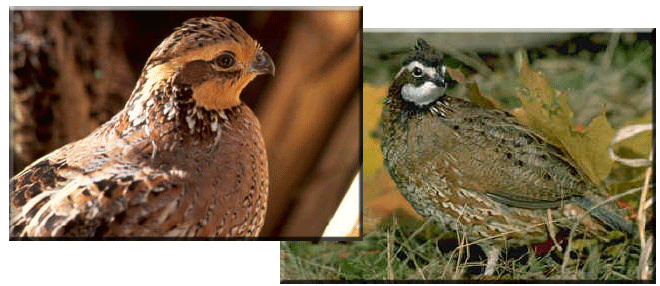
Female Montezuma Quail may resemble Northern Bobwhite, but has a head that appears helmeted rather than crested. Montezuma Quail also lacks the strongly contrasting supercilium and throat of Northern Bobwhite and has a darker belly.
Habitat: The two things that quail need in their surroundings are open areas of grass or weeds for nesting and dense brushy areas for shelter against harsh weather conditions and protection from predators. The Northern Bobwhite quail is found in wooded areas, meadows, and agricultural lands. They may also be found in fallow fields, weed patches and unfarmed areas. Ideal quail habitat consists of 30-40 percent grassland, 40-60 percent cropland, 5-20 percent brushy cover, and 5-40 percent woodland, with all types of vegetation well mixed. Northern Bobwhites are impacted by soil and site quality and do best on moderately fertile, well-drained soils with a high clay-silt component. They tend to flourish in areas that provide early stages of plant vegetation. This means that frequent soil and vegetation disturbance is critical to maintaining good quail habitat. Northern Bobwhites are found from southeastern Ontario to Central America.
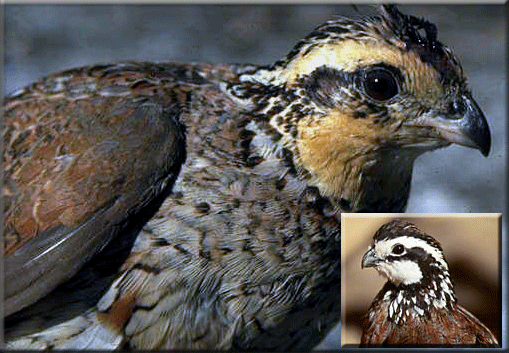
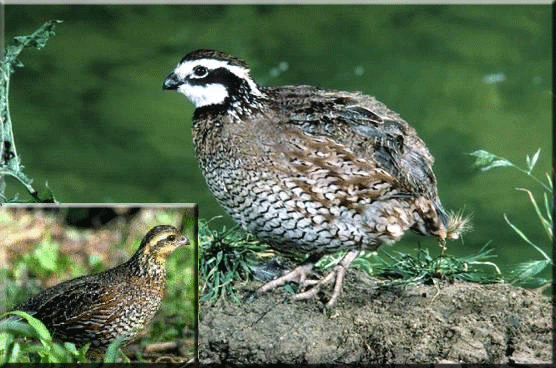 BOBWHITES have a mottled brownish back and wings. Cocks have a white throat, a white stripe extending across the forehead to the base of the neck and whitish undersides with brown and black specks. Hens have a buff-colored throat and forehead stripe and the background color of the undersides is beige.
If you’ve experienced the thrill of a bobwhite covey exploding at your feet, you should have no trouble understanding why this diminutive game bird is so popular. In the excitement of the flush, many a novice empties his gun long before the birds reach the proper shooting range, and the covey flies away untouched.
Bobwhites are found over a much larger range than other quail species. They’re more tolerant of cold weather, yet they also thrive in hot, semiarid climates, assuming they can find a permanent water source. In the southwestern part of their range, bobwhite populations are highly dependent on spring rainfall, as are populations of most desert quail.
Another reason bobwhites flourish over such a large area is their ability to use a wide variety of foods – more than 600, according to one food-habit study.
Seeds of grasses, weeds and legumes are the mainstays of the birds’ diet, but they also eat the greens of these plants, along with acorns, pine seeds, insects, berries and cultivated crops, such as corn, wheat, milo and soybeans.
The distinctive mating call of the cock, “bob-bob-white,” is commonly heard in spring. After he attracts a mate, he scratches a shallow depression in the ground, usually in grassy or brushy cover. He uses grass to line the nest and make a dome over at least one side of it. The hen incubates the eggs, which are subject to heavy predation, especially by skunks and snakes. Sometimes, two or three attempts are needed to bring off a brood, with clutch size decreasing on each successive attempt.
 The chicks, along with the hen, leave the nest within a few hours of hatching, but don’t go far. Normally, they spend their entire life in an area of 40 acres or less, seldom venturing more than 50 yards from the edge of cover.
Bobwhites feed in grassy fields or harvested crop fields early and late in the day. They may feed later on cold or wet mornings, and if hunting pressure is heavy, the feeding periods tend to be shorter. After feeding, they pick up grit before returning to adjacent heavy cover, such as woodlots, wooded creek bottoms and brushy fencelines, draws and ditches. The thicker and more secluded the cover is, the more likely it will hold birds.
In the southwestern part of their range, the key to finding bobwhites is water, particularly in a dry year. Rather than combing dry, windblown plains for a few birds, confine your efforts to brushy stream corridors, grassy fringes of water holes and areas around man-made watering devices, called guzzlers.
A covey, which usually consists of 10 to 15 birds, often forms a roosting ring, with tails pointed toward the center and heads facing outward. In this position, the birds conserve body heat and easily spot any approaching predators.
Bobwhites are ideal quarry for the wingshot. When faced with danger, the birds tend to freeze rather than run, so you have time to get into position for a close shot. When they flush, they usually fly in different directions, a tactic that confuses hunters. But they usually fly no more than 200 yards, unless they’ve been heavily hunted.
After the covey breaks up, individual birds emit a rallying call, “whoo-ee-whoo,” to notify other covey members of their whereabouts.
Once you find a covey, chances are it will stay in the same vicinity all season. And there will most likely be another covey in the same area next year, because it offers the right habitat mix.
The size of the annual bobwhite crop depends mainly on weather. In the North, many birds die of starvation or freeze to death in severe winters with deep snow. In much of the bobwhite’s range, heavy spring rains wash out their nests, but in arid regions, rain means abundant food and high populations.
Although the bobwhite is by far the most common and widespread North American quail species, its range and abundance have shrunk in recent years due to loss of habitat. The decrease in the number of small family farms and the trend toward “clean farming” have meant a severe reduction in the habitat diversity needed for bobwhites to prosper.
The decline has been most noticeable in the South-east, where the quail-hunting tradition is strongest. You may get some good shooting on public hunting lands, but such areas are in short supply and burn out early in the season. Private lands with good numbers of quail are usually reserved for friends and family. Although many plantations have excellent bobwhite populations, hunts can be expensive and too arranged for the tastes of many hunters.
If you don’t have connections, your chances of finding a good quail-hunting spot are better in the northern reaches of the range. Public hunting land is more plentiful there, and the birds are not in such great demand.