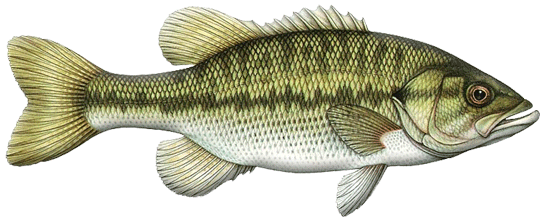
Fresh Water Fish Identification
COMMON NAMES: Spotted bass, Kentucky bass, Spot
SCIENTIFIC NAME: Micropterus punctulatus
IDENTIFICATION: The spotted bass looks very much like the largemouth bass. However, the spotted bass has a dark spot on the gill cover and spots or streaks on the lower side of the body. The mouth, when closed, does not extend beyond the eye. Also, the spotted bass has a rough tongue patch located in the middle of the tongue while largemouth bass lack the tongue patch.
LIFE HISTORY: Spotted bass spawn between mid-April and mid-June. The males construct nests over rocky or gravely substrate near cover. Females lay between 1,100 and 47,000 eggs. Males guard the eggs and fry from short time. Spotted bass feed primarily on microscopic animals, insects, crayfish, and fishes depending on their size and availability of forage.
Biology: Spotted bass seem to be segregated by habitat type from closely related species. They tend to be found in areas with more current than largemouth bass, and they usually inhabit areas that are too warm, turbid, and sluggish for smallmouth bass. Although a large proportion reach maturity within a year, spotted bass found in spawning areas are usually three to four years old. Rock and gravel are usually chosen as suitable spawning areas at water temperatures of 57-74°F. Nest depths may vary widely. Females may lay between 1,150 and 47,000 eggs. Males guard the eggs during incubation and for up to four weeks after they have hatched. As young fish grow their diet shifts from zooplankton to insects, and finally to fish and crayfish.
ADULT SIZE: Spotted bass are usually less than one pound.
FISHING METHODS: Spotted bass can be caught on a wide variety of natural and artificial baits using casting, spinning and fly fishing gear. The best time of year to catch spotted bass is May, June, and July, but they can be caught throughout the year.