Fresh Water Fish Identification
COMMON NAMES: Northern pike, Hammer handles
SCIENTIFIC NAME: Esox lucius
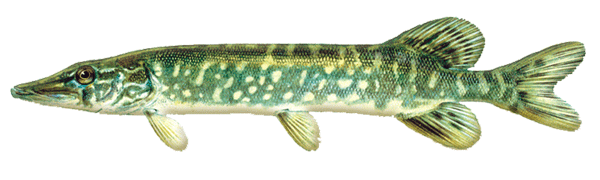
IDENTIFICATION: The Northern pike is a long and slender fish with a duckbill shaped mouth and lots of needle sharp teeth. The dorsal fin is soft and located near the tail fin. In contrast to the muskellunge, the lower half of the opercle (gill cover) does not have scales while the cheek is fully scaled. Northern pike also have numerous white or yellow-green spots on the sides of the body which are arranged in oblique rows. There is no teardrop below the eye.
RANGE AND HABITAT: Northern pike prefer marshes, bays and pools of slow moving water in clear streams where aquatic vegetation is abundant and can be found in most regions of the United States and Canada.
LIFE HISTORY: Northern pike spawn in tributaries as soon as the ice breaks, usually in late February or early March. Females spread between 15,000 to 75,000 eggs freely into vegetated areas. As the eggs settle they adhere to vegetation, rocks, sticks and other debris until they hatch in about two weeks. Young Northern pike feed on zooplankton for about two weeks and then begin switching to a diet of fish. After spawning, females return to the bays, marshes and Lake Erie. Adult pike feed primarily on fish but will take nearly anything they can fit in their mouth, including frogs, muskrats, and small ducks.
ADULT SIZE: Most Northern pike caught weigh between 2 and 10 pounds. However, individuals much larger have been recorded.
FISHING METHODS: Most Northern pike are caught by anglers using large minnows or suckers as bait. Ice fishing often produces nice catches in inland lakes and ponds.