Fresh Water Fish Identification
COMMON NAMES: Largemouth bass, Black bass
SCIENTIFIC NAME: Micropterus salmoides salmoides
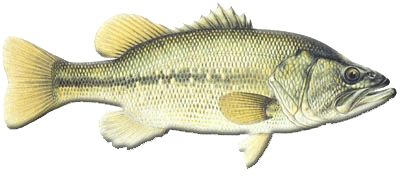
IDENTIFICATION: Largemouth bass are moderately compressed with a deep body. The back of the mouth, when closed, extends past the eye. This characteristic distinguishes it from the smallmouth bass where the back of the mouth does not extend past the eye. The largemouth also has a black band that extends down the side of the body. Spotted bass have a black spot on the gill cover and dark streaks on the lower side of the body.
RANGE AND HABITAT: Largemouths thrive best in warm, shallow, well-vegetated areas of lakes, ponds and sluggish streams. They are rather solitary fish, preferring to stay among dense aquatic vegetation or close to submerged cover, such as stumps, logs, or dock pilings.
LIFE HISTORY: Largemouth bass usually spawn between mid-April and mid-June. Nests are constructed by the male in 1 to 6 feet of water. The female lays between 2,000 and 20,000 eggs in several different nests; one nest can contain eggs from several females. The male guards the eggs until they have hatched. Young largemouth feed on microscopic animals until they reach 1 inch in length. At this time, they begin eating freshwater shrimp, midge larvae, and other small animals. Adults eat crayfish, frogs, large insects, and other fish.
ADULT SIZE: The average size largemouth bass runs from 2 to 4 pounds.
FISHING METHODS: Largemouth bass can be caught on a wide variety of natural and artificial baits using casting, spinning, and fly fishing gear. The best time of year to catch largemouth bass is May, June, and July, but they can be caught throughout the year.