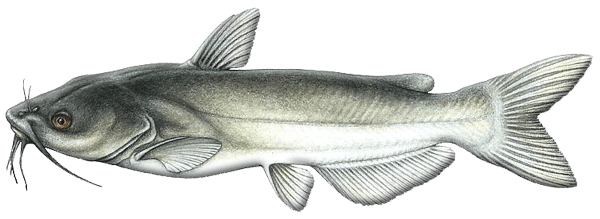
Fresh Water Fish Identification
COMMON NAMES: Channel catfish, Spotted cat
SCIENTIFIC NAME: Ictalurus punctatus
IDENTIFICATION: The channel cat has a slender body with a deeply forked tail. The upper jaw is longer than the lower jaw and there are barbels around the mouth. The dorsal and pectoral spines are sharp and deeply serrated, and the anal fin is curved and has between 24 and 30 rays. The body is bluish silver on the sides and generally has dark spots.
RANGE AND HABITAT: Channel catfish can be found in most large streams, lakes, and many farm ponds. Channel catfish prefer areas with deep water, clean gravel boulder substrates and low to moderate current. However, they are tolerant of a wide range of conditions.
LIFE HISTORY: Channel catfish begin spawning when water temperatures reach 70 F. They use natural cavities, undercut banks and muskrat burrows as nests. The female lays a gelatinous mass containing between 8,000 to 15,000 eggs. The parents remain over the nest to fan the eggs and guard the young after hatching. Adult channel catfish are bottom feeders that use smell and taste to locate food. They are omnivorous and will eat insect larvae, crayfish, mollusks, small fish, and dead fish.
ADULT SIZE: The average size channel catfish is around 12 to 14 inches in length. However, fish over 10 pounds are not uncommon, especially in large rivers and productive lakes.
FISHING METHODS: Channel catfish will bite almost any type of natural bait. The best tactic is to fish nightcrawlers, shrimp, crayfish, chicken liver, stinkbait or cut bait near the bottom. Appropriate size sinkers are useful when fishing for catfish.