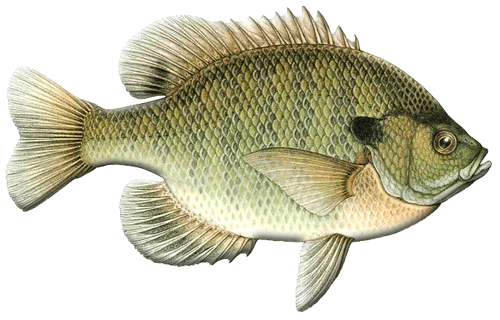
Fresh Water Fish Identification
COMMON NAMES: Bluegill sunfish, Bream
SCIENTIFIC NAMES: Lepomis macrochirus
IDENTIFICATION: A deep slab-sided fish with a small mouth and a long pectoral fin. Colors vary, but the ear flap is always black and bluegills often have a black blotch near the back of the soft dorsal fin.
RANGE AND HABITAT: Bluegill occur throughout the state in nearly every stream and water body. Their preferred habitat is clear, warm lakes with some rooted vegetation.
LIFE HISTORY: Bluegill are nest spawners and typically build nests in large groups, or beds, sometime between May and August. Peak spawning, usually occurs in June. Males select an area in 1 to 4 feet of water and sweep out a saucer shaped nest with their tails. The females then lay between 10,000 to 60,000 eggs in the nest which are guarded by the male. The eggs usually hatch in about five days. Young bluegill eat primarily zooplankton or microscopic animals. Adults will also eat zooplankton, but they feed mainly on aquatic insects.
ADULT SIZE: In well managed waters with good habitat, bluegill frequently reach 7 to 10 inches. However, bluegill vary in size from one water body to the next and can become overcrowded. When they are overcrowded most will remain less than 5 inches in length.
FISHING METHODS: Bluegill bite readily on any number of baits and lures. Probably the most common bait is a worm on a small hook fished under a bobber. However, bluegill will hit almost any natural bait or small spinner baits. Fly fishing is also a popular way to fish for bluegill. Anglers should concentrate on areas near aquatic vegetation or docks.