Identification Tips:
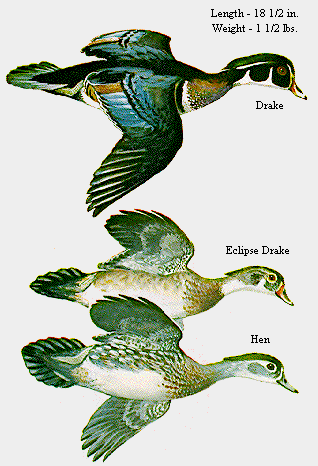
Length: 13.5 inches Wingspan: 28 inches
A medium-sized duck with a long crest on head
Long-winged and long-tailed
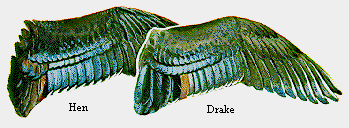
Blue-green speculum with white rear border
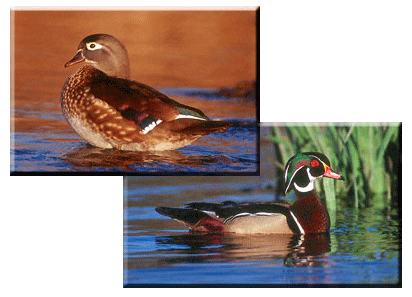
Adult male alternate:
Alternate plumage worn from Fall-through early summer
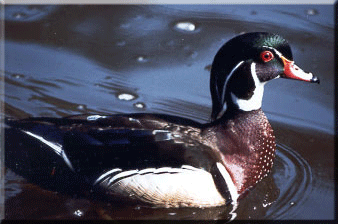
Red bill
Red eye
Green head
Striking white stripes about face and crest with a large white throat patch and "fingerlike" extensions onto cheek and neck
Chestnut breast and neck with vertical white stripe at lower margin
Golden flanks bordered above by a white flank stripe
White belly
Iridescent dark green-blue back and wings
Adult male basic:
In basic plumage, the male resembles the female, but often retains the distinctive neck patch and red bill
Adult female:
Gray bill
White teardrop shaped patch around eye
White throat
Gray-brown head and neck
Gray-brown breast stippled with white and fading to a white belly
Dark brown back
Juvenal plumage:
Gray bill
Female similar to adult female
Males similar to adult females, but with white neck patch
Similar species:
Adult male is unmistakable. Female, immature and eclipse males are nondescript, but distinctive in face pattern, shape and speculum pattern.
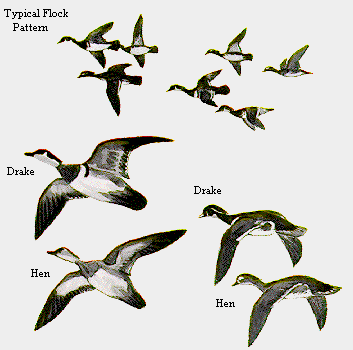
Found in all flyways; most numerous in the Atlantic and Mississippi flyways and fewest in the Central. They are early migrants; most of them have left the northern states by mid-November.
Frequents wooded streams and ponds; perches in trees. Flies through thick timber with speed and ease and often feeds on acorns, berries, and grapes on the forest floors. Flight is swift and direct; flocks are usually small. In the air, their wings make a rustling, swishing sound. Drakes call hoo-w-ett, often in flight; hens have a cr-r-ek when frightened.