Identification Tips:
Length: 45 inches Wingspan: 95 inches
Large, long-necked waterbird with short legs and a short duck-like bill
Long neck held straight up with a kink at base
Adult:
Black bill
Culmen straight
Black of bill extends up to eye but does not encircle it
V shaped demarcation on forehead between black bill and white feathering
Black legs and feet
Entirely white plumage
Sexes similar
Immature:
Body grayer than adult
Similar species:
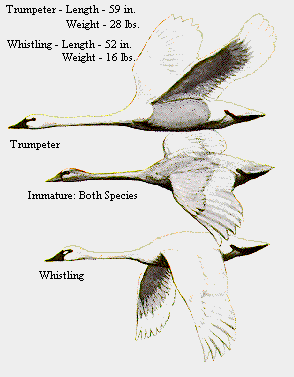
The very large Trumpeter Swan is unlikely to be confused with anything but other swans. White Pelicans, Whooping Cranes, Wood Storks, and Snow Geese are all white birds that from a great distance could look like swans but all have black primaries. The adult Mute Swan can be told from the adult Trumpeter Swan by its orange and black knobby bill. The adult Trumpeter Swan is very similar to the adult Tundra Swan but it is slightly larger, has a straight culmen, the bill has no yellow spot, the eye is almost enclosed by black, and the white feathering on the head extends in a v shape into the dark bill. We will get back to you about the immatures!
Once thought to be rare, trumpeter swans are slowly increasing in Alaska and on western refuges and parks. Whistling swans are common and increasing. They winter near Chesapeake Bay, San Francisco Bay, Puget Sound and salton Sea. Occasionally found in fields. Both species are large with pure white plumage.