 Identification Tips:
Similar species:
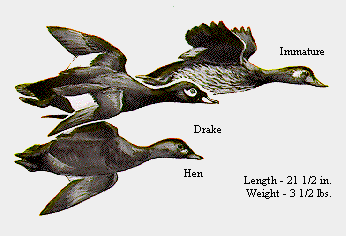
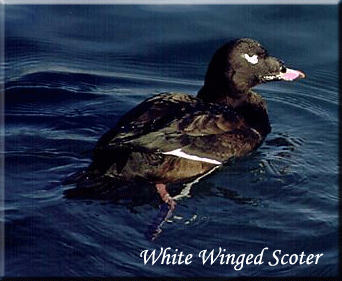
The White-winged Scoter is most distinctive in flight. Its large white wing patches and dark plumage are diagnostic. At rest, the dark plumage is similar to other scoters; sometimes, the white wing patches are visible. Adult male White-winged Scoters have a distinctive white patch around the eye. Female Black Scoters have darker crowns with a contrasting paler face, lack the white spots on the face, and have rounder heads. Female Surf Scoters are very similar to female White-winged Scoters but have darker crowns and more obvious bills.
The three scoters in this section are sea ducks, wintering on open coastal waters. White-wings are among the heaviest and largest of all ducks.
Identification Tips:
Length: 14 inches Wingspan: 33 inches
Medium-sized diving duck
Sloping forehead
Base of bill unfeathered
Adult male:
Entirely black plumage
White patches on nape and forehead
Colorful bill: white with a red tip and black spot at base
Immature male similar to female
Adult female:
Two variably white spots on face
Dark crown
Very dark plumage
Immature females somewhat paler
Similar species:
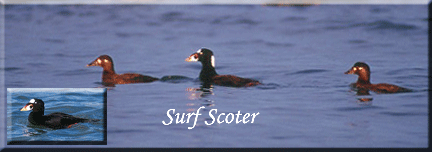
The adult male Surf Scoter with its black plumage and white patches on the nape and forehead is distinctive. Female plumages of the Surf Scoter are similar to female plumages of the other scoters. It can be told from the Black Scoter by it more sloping forehead, and white face patches. The White-winged Scoter has white wing patches, a face that doesn't contrast with the crown, and a smaller bill.
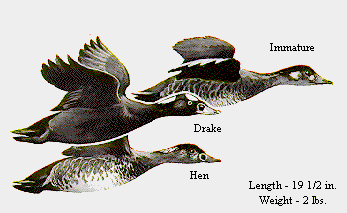
Like all scoters, these birds move along our coasts in loose flocks, stringing into irregular, wavy lines. Drakes can be distinguished from other scoters by two white patches on their head and bright color of the bill. Flight is strong, direct, usually close to the waves.
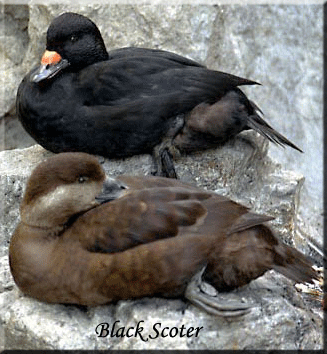
Identification Tips:
Length: 14 inches Wingspan: 33 inches
Medium-sized diving duck
Dark bill
Rounded head
Paler undersides of flight feathers contrasting with darker wing linings
Adult male:
Entirely black plumage
Bright orange patch at base of bill
Immature male similar to female but has yellow patch at base of bill
Adult female:
Dark crown and rear of head contrasting with paler face
Very dark plumage
Immature females somewhat paler
Similar species:
With its black plumage and bright orange base to the bill the male Black Scoter is unlikely to be confused with any other duck. The orange patch on the bill is visible from considerable distances, even in flight. The dark brown plumage of females and immatures is similar to that found in other female scoters. Note that the Black Scoter has a rounder head and lacks white patches on the face instead having a pale face contrasting with a dark crown. In flight, note the paler undersides to the flight feathers contrasting with the dark wing linings. The round head and dark plumage of the female Black Scoter is somewhat reminiscent of the American Black Duck but the bill of the black duck is greenish, not black.
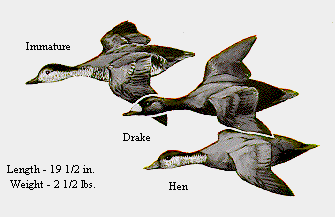
In flight, drakes appear all black except for the flash of the slight gray underwing and the bright yellow swelling at the base of the upper bill. Scoters feed on mullusks, crabs, and some fish and very little vegetation. They are locally known as "coots".