Identification Tips:
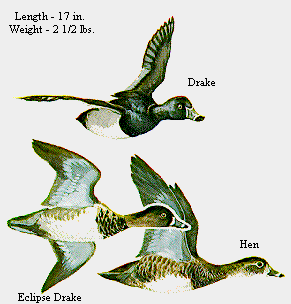
Length: 12 inches Wingspan: 28 inches
Small, compact diving duck
Peaked crown
Dark wing with grayish flight feathers
Immature female similar to adult female, immature male is similar to female in autumn, but acquires alternate plumage during winter
Adult male alternate:
Alternate plumage worn from fall through early summer
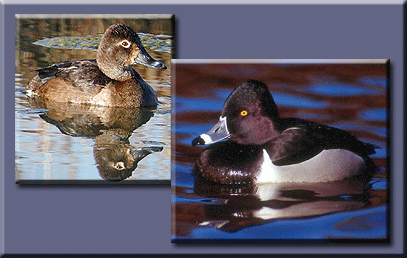
Blue bill with white ring around base, white subterminal ring, and black tip
Yellow eye
Purple head and neck
Chestnut ring around neck is not easily visible
Black breast
Gray flanks with vertical white finger at forward portion
Dark back, tail, upper- and undertail coverts
Whitish belly
Adult male basic:
Similar to adult female
Adult female:
Dark brown crown and pale gray-brown face, becoming whitish on lores
Dark blue-gray bill with white ring before black tip
Brown eye with narrow white eye ring
Dark brown body plumage with very dark back
Similar species:
Adult males can be distinguished from Scaup by different bill pattern, black back and grayish flanks. Female can be distinguished from female scaup by black tip on bill, and lack of distinct white patch on face. Female-plumage birds are distinguished from female-plumage Redheads by colder brown plumage, contrasting gray-brown face, and peaked crown.
Similar in appearance to scaups, but more often found in fresh marshes and wooded ponds. In flight, the dark wings are different from the white-edged wings of scaup.

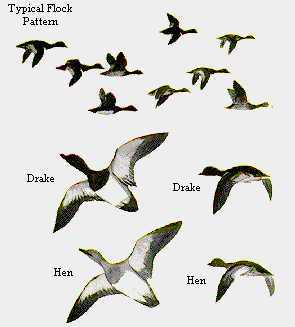
Faint brown ring on drake's neck never shows in the field; light bands at tip and base of bill are conspicuous. Fly as small flocks in open formation; often land without circling. Drakes purr; hens are usually silent.