Identification Tips:
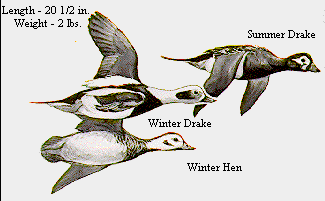
Length: 15 inches Wingspan: 30 inches
Average Weight Range mature oldsquaw weighs 1.8 to 2.2 pounds
Diving duck
Dark wings
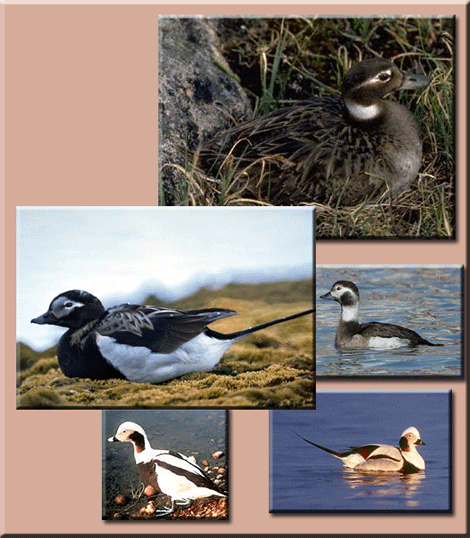
Adult male alternate:
Plumage worn in Spring and Summer
Very long, black, central tail feathers
Black head, neck, chest, and back
Large white patch on the head around the eye
White flanks, belly and undertail coverts
Pinkish bill
Adult male basic:
Plumage worn in Fall and Winter
Very long, black, central tail feathers
White crown, neck, back, flanks, and belly
Black chest and lower back
Gray face patch
Black bill with pale near tip
Immature male:
Short, black, central tail feathers
White head and neck with dark crown and face patch
Gray chest and back
Whitish flanks and belly
Black bill with pale near tip
Adult female winter:
White head and neck with dark crown and face patch
Gray back
White flanks and belly
Pale bill
Plumage somewhat darker in summer
Range
Oldsquaws breed in northern Alaska and the Canadian Arctic and are the most populous of breeders in the Arctic. It breeds along the Arctic coasts and inland wherever tundra and tundra-like conditions provide the necessary habitat. Wintering occurs in the upper Atlantic and Pacific Coasts and the Great Lakes.
Habitat
Oldsquaws prefer coastal areas, the Arctic tundra, and the Great Lakes.
Food Usage/Selection
The oldsquaw’s diet is made up of small shellfish, mollusks and insects. This duck dive to greater depths than all other diving ducks, sometimes as deep as 180 feet or more.
Common Hunting Methods
Oldsquaw ducks are hunted with various types of shotguns with non-toxic, or non-lead, shot. A retrieving dog is very helpful, depending on the hunting style used.
Hunting Challenges/Values
When oldsquaw ducks do fly, they are very fast and stay close to the surface of the water in small compact groups, which makes shooting an individual duck quite a challenge. As with other duck, these are harvested for their tasty meat and beautiful mounts.
A slim, brightly plumaged sea duck. Smaller than the scoters or eiders. Flight is swift and low with constantly changing flock formations. Ranges along both coasts and the Great Lakes. One of the most vocal of ducks; drakes have a loud pleasant caloo,caloo, constantly heard.