Identification Tips:
Length: 15-16 inches Wingspan: 36 inches
Large dabbling duck
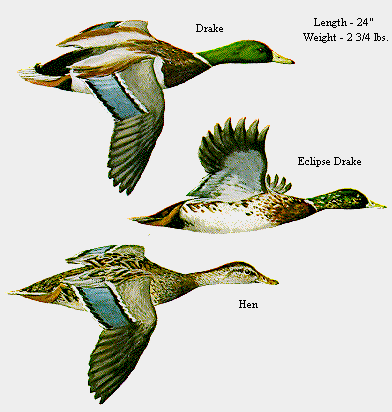
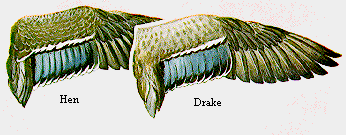
Blue speculum with white bar along both leading and trailing edges
Silvery-white wing linings
Juvenile similar to adult female
In the southwestern United States the "Mexican Duck", formerly a separate species, has both sexes similar to the female Mallard
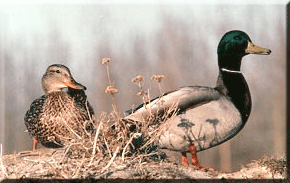
Adult male alternate:
Alternate plumage worn from fall through early summer
Gray back
Yellow bill
Green head
White ring around neck
Chestnut breast
Gray flanks and upperwing coverts
Black undertail coverts contrast with white tail
Adult male basic:
Similar to adult female, but usually with chestnut breast and an unmarked yellowish bill
Adult female:
Orange bill with black central patch
Pale brown face
Dark cap and eye line
Mottled brown and tan plumage
The mallard is our most common duck, found in all flyways. The males are often called "greenheads." The main wintering area is the lower Mississippi basin, and along the gulf coast, but many stay as far north as open water permits.
Flocks often feed in early morning and late afternoon in nearby harvested fields, returning to marshes and creeks to spend the night. The flight is not particularly rapid. Hens have a loud quack; the drak's voice is a low-pitched kwek-kwek.