Waterfowl Identification
Common Merganser
Identification Tips:
Length: 18 inches Wingspan: 37 inches
Large, sleek diving duck
Long, pointed bill with serrated edges
Red bill is thick at base, tapering towards tip
Sleek, tapered crest, more obvious on females than on males
Brown eye
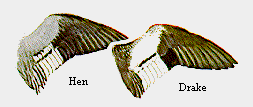
White secondaries
Immature similar to adult female, often with a less-distinct chin patch
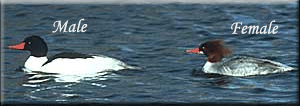
Adult male:
Greenish-black head and upper neck
White breast, flanks and belly
Black back and upperwing coverts with white scapulars
White secondary coverts crossed with indistinct dark bar
Alternate plumage worn from fall through early summer
Male in basic eclipse plumage similar to adult female
Adult female:
Red-brown head meets pale breast in crisp line of division
Well-defined white chin
White breast and belly
Pale gray body plumage
Similar species:
Adult male in alternate plumage is somewhat similar to male Red-breasted Merganser but has white breast and flanks, and a less obvious crest. Female, immature and eclipse male distinguished from similarly-plumaged Red-breasted Mergansers by sharply-defined chin, reddish head contrasting with white breast, paler gray plumage, sleeker crest and larger bill. In winter, Common Mergansers, unlike Red-breasted Mergansers, are generally found in freshwater habitats.
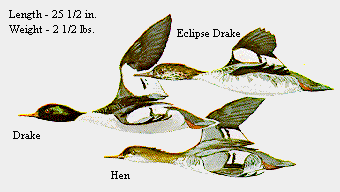
This species is larger than the red-breasted merganser, and is one of the largest of our ducks. It is one of the last to migrate south, and is more common than the red-breasted merganser on inland waters.
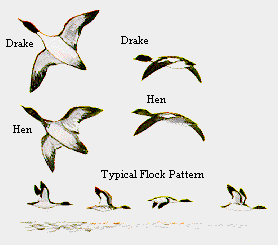
Flocks move in "follow the leader" style, low over the water. The only call seems to be a startled croak.