Identification Tips:
Length: 15 inches Wingspan: 34 inches
Medium-sized diving duck
Long sloping forehead and peaked crown produce distinctive profile
Black bill
Immature female similar to adult female, immature male is similar to female in autumn, but acquires alternate plumage during winter
Adult male alternate:
Alternate plumage worn from fall through early summer
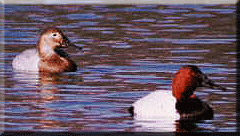
Red eye
Reddish head and neck
Black breast
Pale gray back and flanks
White belly
Black tail, upper- and undertail coverts
Adult male basic:
Duller than alternate plumage, especially about the breast and back
Adult female:
Brown eye
Brown head and neck
Pale gray back and flanks
White belly
Similar species:
Adult male Redhead is similar in alternate plumage to adult male Canvasback, but has yellow eye, blue bill with black tip, much grayer back and different profile. Female-plumage Redheads also have blue-gray bill with black tip, brownish body plumage without contrast between the head and body and a different profile.
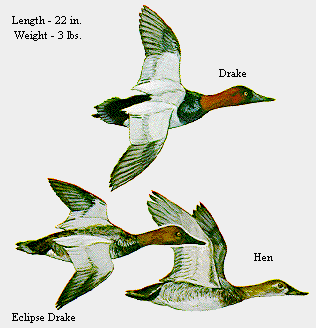
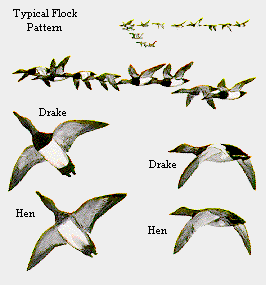
Normally late to start south, canvasbacks migrate in lines and irregular V's. In feeding areas, compact flocks fly in indefinite formations. Their wingbeat is rapid and noisy; their speed is the swiftest of all our ducks. Feeding behavior is highly variable. In some areas they feed at night and spend the day rafted up in open waters; in other areas they feed inshore mornings and evenings.
On the water, body size and head shape distinguish them from scaups and redheads. Drakes croak, peep, and growl; hens have a mallard-like quack.